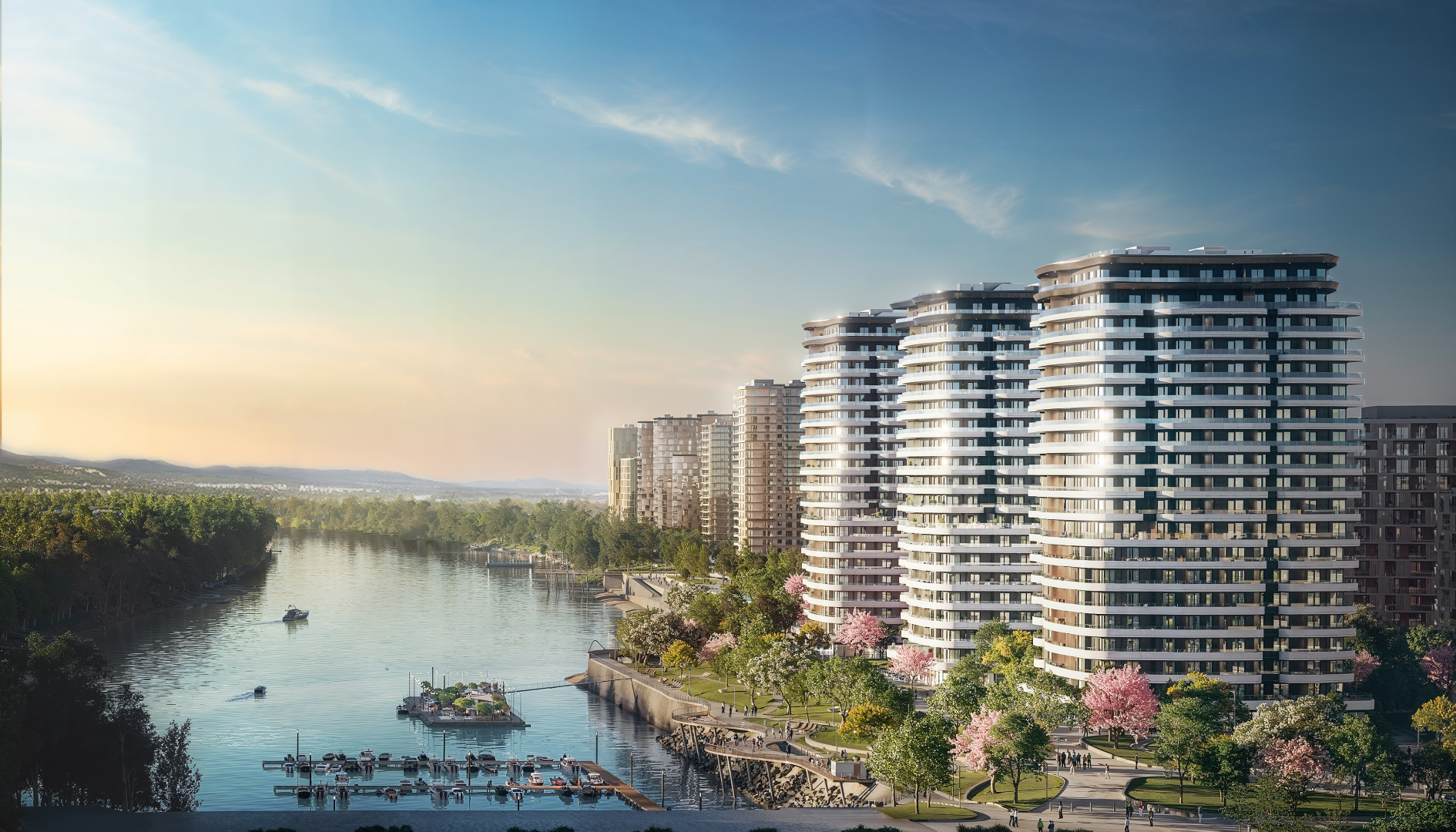
“A successful neighbourhood is not simply a collection of buildings,” said Márk Koritsánszky, Project Director of Marina City. The neighbourhood development, spanning 14 hectares along a 1.2-kilometre stretch of the Danube, will bring together waterfront panoramas, a car-free green environment and intelligent spatial planning within a single concept. The aim of the development is not simply to create new residential buildings, but to establish a liveable, complex urban ecosystem that combines the proximity of the city centre with the tranquillity of a nature-oriented environment.
At Marina City, the residential buildings will be complemented by spacious, car-free public areas, internal promenades and a Clubhouse offering a wide range of services, including a kindergarten, fitness and wellness facilities, coworking spaces and a playhouse. The development also draws on the experience of previous urban regeneration projects by the Futureal Group, including Corvin Promenade and Dél-Buda City Centre: the concept is based on the idea that a successful neighbourhood requires not only buildings, but also thoughtfully designed public spaces, pedestrian connections and a diverse range of services. Marina City will be approximately 15 minutes from Budapest city centre, while the parking facilities to be built underground will allow the surface-level green spaces and promenades to remain car-free.
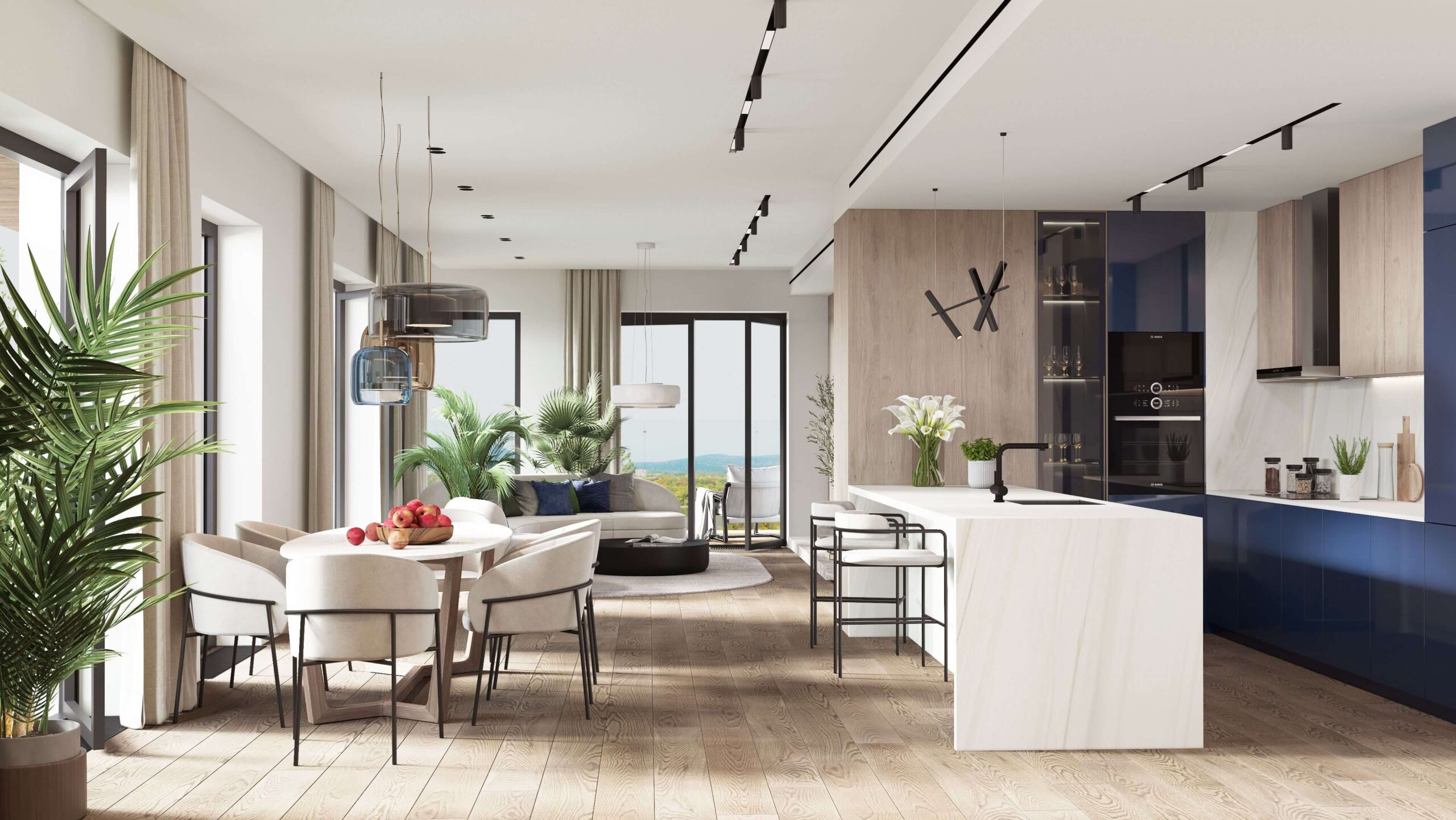
The Danube waterfront is not merely the source of the panoramic views, but a defining element of the entire project’s identity, running consistently through the concept from the urban structure and architecture to the character of the apartment interiors. Large terraces, carefully proportioned windows and the deliberate positioning of the buildings will place natural light and unobstructed views at the centre of the design, while distances of up to 50 metres between façades will help ensure that as many apartments as possible have a direct visual connection with the Danube. The apartment interiors will feature bright spaces, natural materials and flexible floor plans, while multifunctional furniture and interconnected spaces will allow the homes to adapt to different stages of life.
The full article is available on elle.hu in Hungarian languange.